
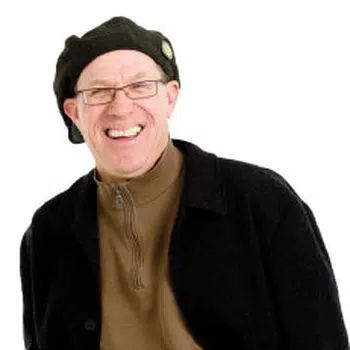
Fairmont farmer Lawrence Sukalski, along with Thief River Falls grower Dave Garry, is joining the Minnesota Soybean Research & Promotion Council for a three-year term, effective July 1. Photo courtesy of the United Soybean Board.
MANKATO – The results are in, and two experienced farmers have been tapped to join the Minnesota Soybean Research & Promotion Council.
The Council, in collaboration with the Minnesota Department of Agriculture, is proud to announce that five grower leaders in total have been elected and reelected to the board of directors. MSR&PC’s elected board of 15 directors is charged with directing soybean checkoff dollars to increase farmer profitability. Farmer leaders are dedicated to maximizing checkoff dollars through funding research, growing domestic and international markets, creating value-added uses and leadership development.
Martin County farmer Lawrence Sukalski and Pennington County farmer Dave Garry were elected to serve their first terms on the Council. Sukalski will serve District 8, replacing Rochelle Krusemark, who served four terms across 12 years on MSR&PC.
“I’ve got a good handle on the soy checkoff and what the Council is managing,” said Sukalski, who farms in Fairmont. “This is a great opportunity for me to ensure long-term success for our checkoff by applying principles of transparency, efficiency and value-driven decision-making for Minnesota soybean farmers.”
Sukalski will hit the ground running as director: As one of Minnesota’s three United Soybean Board (USB) directors, he’s
“I’m looking forward to bringing my experience on USB to the Council,” said Sukalski, who will term off USB later this year. “The Council runs their meetings very professionally and efficiently, and I want to continue in that manner.”
As a state and national director, Sukalski said his top priority is continuing to grow demand for Minnesota’s soybean farmers, who raise nearly 330 million bushels each year across more than 7 million acres, ranking third in the nation.
“It’s all about ‘moving the pile’ of soybeans,” Sukalski said. “I want to take some of my knowledge on the feed side and help Minnesota. We know we have much better quality than anywhere else in the world. We just need to keep passing that on and reminding people that, yes, we do have a good product and that it’s better than anyone else’s.”
Dave Garry farms in Thief River Falls, where he grows soybeans, corn, black oil sunflowers and small grains. He currently chairs the Pennington-Red Lake County Soybean & Corn Growers Board. As District 1, 2 & 3 director, Garry will fill the seat held by Bill Zurn, who served over 20 years on MSR&PC.
“I want to help MSR&PC expand into new markets and promote uses for Minnesota-grown soybeans, both domestically and internationally,” Garry said. “I want to find ways to lower input costs and work on advancing research in areas such as Iron Deficiency Chlorosis, soybean cyst nematodes, white mold and improving yields.”
A versatile crop
In addition to Sukalski and Garry, three checkoff veterans were reelected to their positions: District 4 Director Patrick O’Leary; District 5 & 6 Director Pat Sullivan; and District 7 Director Ron Obermoller.
O’Leary, a past Council chair, will continue in his longstanding efforts to diversify market opportunities for Minnesota soybean farmers.
“The promotion of soybeans and development of markets for our soybeans is extremely important in ensuring the continued success of all farmers. It is also necessary that we research and develop soybeans that will not only lead to better yields and profitability for the farmer but also increase the quality of soybeans for our markets,” O’Leary said. “The wise investment of our checkoff dollars will ensure that Minnesota and the U.S. remain leaders in the soybean industry, keeping our farmers competitive and successful in the global agriculture economy.”
Sullivan said he’s eager to continue his role in supporting cutting-edge research and soy-based products. There are currently more than 1,000 commercially available products containing soy.
“Thanks to soy checkoff investments, we’ve helped develop shingle treatments, road treatments, firefighting foam that helps lower the risk of cancer and soy-based field turf,” said Sullivan, who farms in Franklin and currently serves as MSR&PC secretary. “As a farmer and checkoff director, I continue to be amazed by how versatile our crop is. I’m also passionate about the agronomic research we support. Our checkoff dollars are finding solutions for weed resistance in soybeans, developing better varieties or treatments for diseases and supporting the ongoing research for these products.”
Obermoller, who also serves on the Minnesota Soybean Processors board, said finding more domestic demand for soybeans is critical in the years ahead. Soybeans are currently Minnesota’s top ag export, yet animal agriculture (primarily hogs, turkeys and dairy cows) consumes nearly 1.8 million tons of soybean meal each year. Biodiesel also continues to increase the value of soybeans by about $1 per bushel
“We need to be able to consume our product here,” said Obermoller, a 12-year Council veteran. “That’s where the checkoff comes in – we have the ability to see a problem and try to solve it ourselves.”
The Minnesota Department of Agriculture administers the election over several months, and more than 3,800 Minnesota farmers received ballots.
For more than 50 years, Minnesota’s checkoff program has helped improve the farm economy. Half of the state’s soybean checkoff funds stay in Minnesota, with the other portion invested by USB. The national soybean checkoff is federally mandated by the Soybean Promotion, Research, and Consumer Information Act. Those funds are directed toward building new markets, creating new uses, addressing agronomic issues and growing demand for soy. For each dollar farmers invest into the checkoff, growers earn an estimated $12.30 in return value.
“We’re grateful to Bill Zurn and Rochelle Krusemark for their many years of dedication to the Council. They both played big roles in promoting checkoff projects, including new uses and the importance of animal agriculture to our profitability, and we thank them for their services,” said Ben Storm, MSR&PC vice chair and election chair. “We’re also pleased to welcome Dave Garry and Lawrence Sukalski to the Council and thank everyone who participated in this year’s election process.”
New and returning directors will begin their three-year terms beginning July 1. The Council will gather June 15-16 in Mankato for its quarterly board meeting to pay tribute to outgoing directors, elect officers and look ahead to Fiscal Year 2027 priorities.
“The Council has always benefited from new ideas and new perspectives, and as we look ahead to the coming year and beyond, it’s imperative that we continue to find new ways to improve our farm economy,” CEO Tom Slunecka said.



Comments