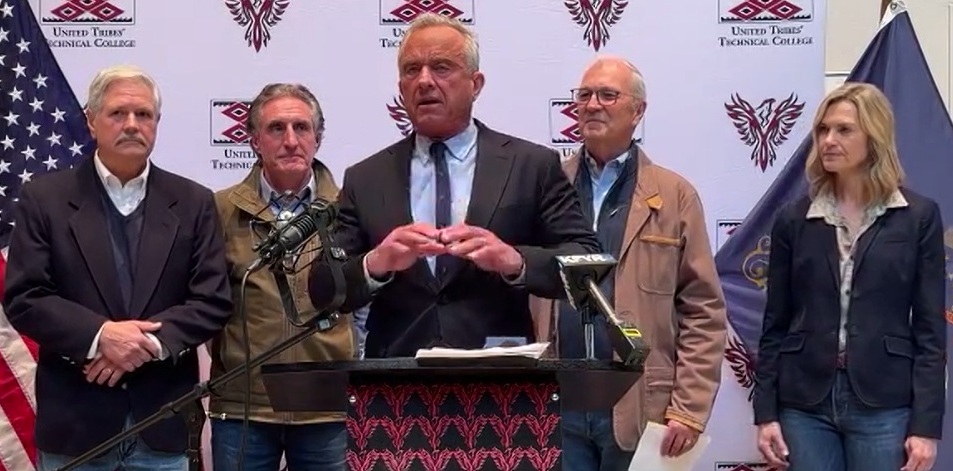
U.S. Health and Human Services Secretary Robert F. Kennedy Jr. joined Interior Secretary Doug Burgum and members of the state's congressional delegation for events in the Bismarck area.
BISMARCK, N.D. (KFGO) – Top federal and state officials met in North Dakota on Thursday to examine how better farm soil can boost grower profits and improve health across the nation.
U.S. Health and Human Services Secretary Robert F. Kennedy Jr. joined Interior Secretary Doug Burgum, Gov. Kelly Armstrong, and members of the state’s congressional delegation for events in the Bismarck area.
The visit started with a morning roundtable at Black Leg Ranch near McKenzie. Farmers, ranchers and officials discussed regenerative farming, a method that uses cover crops and natural grazing to rebuild soil nutrients.
Armstrong highlighted the state’s new Legacy Soil Health and Habitat Program. The two-year, $6.5 million project pays farmers to plant perennial grasses on working cropland. Officials said the program has enrolled more than 9,000 acres for 2026 to improve soil, save water and build wildlife habitat.
U.S. Sen. Kevin Cramer, R-N.D., said cutting back on costly chemical fertilizers helps family farms survive tight markets by lowering expenses.
“My 89-year-old dad was so skeptical, and now he looks around, he looks at the neighbors and says, ‘Why aren’t you all doing this?'” Cramer said, sharing a story from a local grower. “Because they’re producing soybeans maybe 12 bushels per acre less, and their profit is higher because of the inputs.”
Later, leaders met at United Tribes Technical College in Bismarck to talk about tribal health.
Kennedy announced that Indian Health Service facilities nationwide will soon update hospital menus to match federal dietary rules. He said removing processed foods and sugary drinks inside clinics helps lower high rates of diabetes.
Kennedy also said that key tribal health funding was shielded during federal budget cuts.
“The two sub-agencies that I was able to save from any cuts was IHS and Head Start, and both of those affect the Indian communities,” Kennedy said.
Burgum added that federal teams are working through more than 55,000 delayed tribal estate cases, returning hundreds of millions of dollars in inherited assets to Native families.




Comments