www.nrcs.usda.gov/programs-initiatives/wetland-mitigation-banking-program
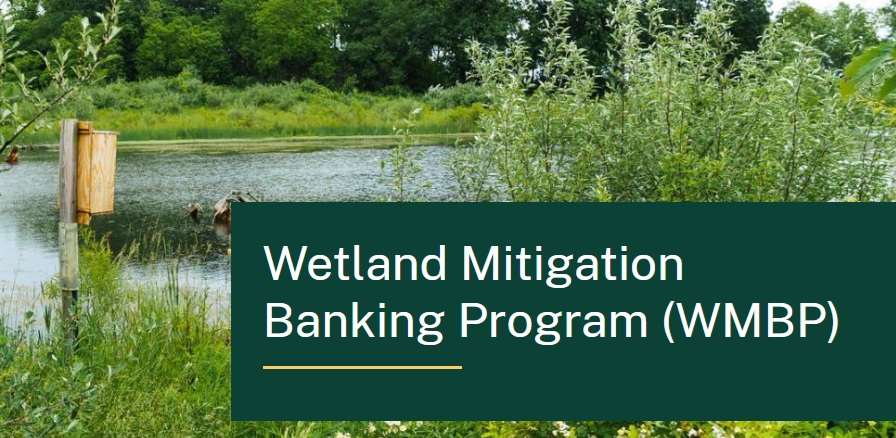
The U.S. Department of Agriculture is investing $4.4 million for seven projects to support the development of wetland mitigation banks for agricultural producers. Through USDA’s Wetland Mitigation Banking Program, wetlands are restored, created or enhanced, generating credits that can be purchased by producers looking to compensate for unavoidable impacts to wetlands at another location.
“USDA is putting Farmers First by investing in projects that expand wetland mitigation banking opportunities for agricultural producers across the country,” said USDA’s Natural Resources Conservation Service Chief Colton L. Buckley. “Through these investments, we are supporting working lands, advancing voluntary conservation efforts, and helping ensure producers have the options to remain eligible for USDA programs.”
Priority was given to banks in states with significant numbers of individual wetlands, wetland acres and conservation compliance requests, including:
- Wisconsin Department of Natural Resources will expand and improve the Wisconsin Agricultural Mitigation Bank. They will work to facilitate credit sales to producers, monitor and enhance current mitigation sites, develop new mitigation sites, and market the mitigation program.
- South Dakota Farm Bureau will expand the current wetland banking program, South Dakota Ag Wetland Exchange. They will identify, design, and establish four additional wetland mitigation bank sites in high-demand areas of eastern South Dakota, generating approximately 120 mitigation credits.
- North Dakota Agricultural Mitigation, Inc. will help manage and grow the North Dakota Wetland Trade program to provide North Dakota producers with a cost-efficient and reliable system to address their wetland mitigation needs, while at the same time providing incentives for landowners agreeing to restore or create wetlands.
To participate in most USDA programs, agricultural producers agree to comply with the wetland conservation provisions, meaning producers will not plant agricultural commodities on converted wetlands or convert wetlands to enable agricultural production. In situations where avoidance or on-site mitigation is challenging, the Farm Bill allows for off-site mitigation through the purchase of mitigation banking credits.
NRCS awarded the first WMBP grants in 2016. Since then, NRCS has awarded 41 projects supporting the creation or expansion of wetland mitigation banks in 14 states.
To learn more about the Wetland Mitigation Banking program, and how wetland mitigation banks work, visit the WMBP webpage.
Source: USDA




Comments